

10 Powerful AI Tools for Language Teachers
Imagine a world where language teachers have access to cutting-edge tools powered by artificial intelligence (AI) that can transform their classrooms into dynamic, interactive language learning environments.
These tools not only facilitate the creation of original audio and video content, but also provide personalized feedback, enhance accessibility, and create immersive language learning experiences.
So here we are, the future is already here. As technology continues to advance, AI is revolutionizing language education in ways that were once unimaginable.
Want to join us in discovering 10 cutting-edge AI tools that are shaking up language instruction for teachers? These innovative tools are empowering educators and can help you take your teaching to new heights. Let’s explore the exciting possibilities together!
1. Text-to-Speech (TTS) Tools
One of the most powerful applications of AI in language teaching is Text-to-Speech (TTS). TTS technology converts written text into natural-sounding audio, which can be used to create original audio content for language learners of all levels.
There are several TTS synthesis tools available, such as Google Text-to-Speech, Resemble AI, Murf AI and Synthesys, which offer a wide range of voices and languages to choose from.
Language teachers can use these tools to create engaging listening materials, including dialogues, stories, and news articles, which can help students improve their listening skills and pronunciation.

2. Chatbots for Language Practice
AI-powered chatbots can offer interactive language practice opportunities for language learners. These chatbots use NLP technologies to engage in conversations with users, providing responses and feedback based on their input.
ChatGPT, Duolingo, and Replika are examples of popular language practice chatbots that utilize AI. Language teachers can use these chatbots as supplementary tools for speaking and writing practice, allowing students to practice their language skills in a controlled and supportive environment.
Chatbots can also provide immediate feedback and corrections, which can be valuable for learners’ language development.
3. Video Captioning and Subtitling Tools
AI-powered video captioning and subtitling tools can greatly enhance the accessibility of video content for language learners.
These tools use speech recognition and natural language processing (NLP) technologies to automatically generate captions or subtitles for videos, making them suitable for learners with hearing impairments or those who prefer visual support. YouTube’s automatic captioning feature and Amara are examples of popular video captioning and subtitling tools that utilize AI.
Language teachers can leverage these tools to create captioned or subtitled videos, which can provide additional support for language learners in understanding spoken language, and also serve as a valuable resource for vocabulary and listening practice.

4. Speech Evaluation and Feedback Tools
AI-powered speech evaluation and feedback tools can provide language teachers with valuable insights into their students’ pronunciation and speaking skills.
These tools use speech recognition and NLP technologies to analyze students’ spoken language and provide feedback on various aspects, such as accuracy, fluency, and intonation. Tools like ELSA Speak, Pronunciation Power, and SpeechAce are examples of popular speech evaluation and feedback tools that utilize AI.
Language teachers can use these tools to assess their students’ speaking skills, provide individualized feedback, and offer targeted pronunciation practice, thus helping students improve their spoken language skills more effectively.
5. Grammar and vocabulary checkers
They can be powerful tools for language teachers to support students’ writing skills. These tools use NLP technologies to analyze written text and provide feedback on grammar errors, vocabulary usage, and writing style.
Grammarly, ProWritingAid, and Ginger are examples of popular grammar and vocabulary checker tools that utilize AI. Language teachers can recommend these tools to their students for self-editing and proofreading purposes, or use them for grading and feedback on written assignments.
By using these tools, language learners can improve their writing skills and produce more accurate and fluent written texts.

6.Language Translation Tools
These tools use machine learning algorithms to automatically translate text from one language to another, making them useful for students who are learning a second language or for teachers who need to communicate with students who speak different languages.
Popular language translation tools include Google Translate, DeepL, and Microsoft Translator, which support multiple languages and provide quick and relatively accurate translations.
Language teachers can use these tools to facilitate communication in multilingual classrooms, create bilingual materials, or provide translations for difficult vocabulary or sentences, thus supporting students’ language learning journey.
7. Speech-to-Text (STT) Tools
Transcription tools use AI to convert spoken language into written text. These tools can be particularly useful for language teachers in transcribing audio or video content, such as authentic recordings or student speeches, to create written transcripts for language learners.
Popular STT transcription tools include Google Cloud Speech-to-Text, Microsoft Azure Speech to Text, and IBM Watson Speech to Text, which offer high accuracy and support multiple languages. Transcripts can be used for various instructional purposes, such as vocabulary and grammar exercises, listening comprehension tasks, and speaking practice.
8. Adaptive Learning Platforms
Adaptive learning platforms powered by AI can personalize language learning experiences for individual students.
These platforms use data-driven algorithms to analyze learners’ performance and provide tailored recommendations for their specific needs. Babbel, Rosetta Stone, and Duolingo are examples of popular adaptive learning platforms that utilize AI.
Language teachers can incorporate these platforms into their instruction to provide individualized learning paths for students, addressing their strengths and weaknesses, and helping them progress at their own pace.
Adaptive learning platforms can also provide performance analytics and progress tracking, allowing teachers to monitor students’ progress and adjust their instruction accordingly.
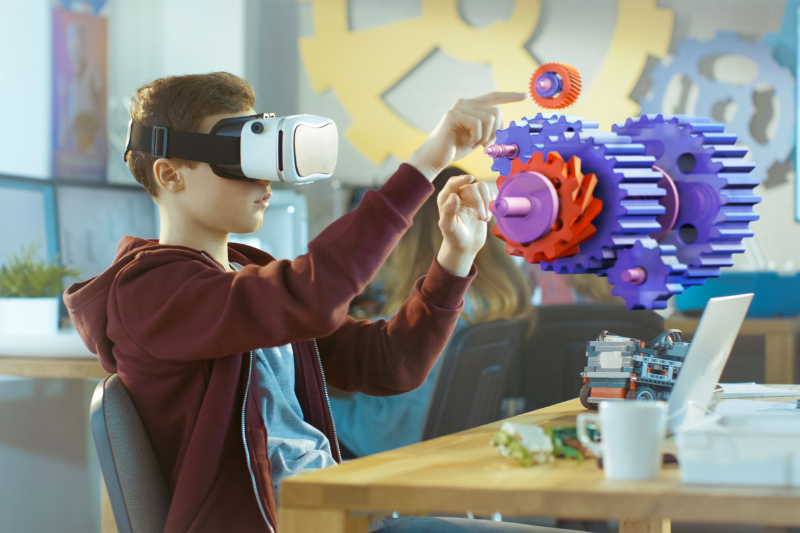
9. Virtual Reality (VR) for Immersive Language Learning
Virtual Reality (VR) is a cutting-edge technology that can provide immersive language learning experiences.
VR language learning platforms, such as MondlyVR, VRChat, and ImmerseMe, use AI-powered simulations to create virtual environments where learners can practice their language skills in realistic contexts.
Language teachers can use VR to provide authentic language practice opportunities, such as virtual travel scenarios, simulated conversations, and cultural experiences.
VR can enhance students’ language skills, such as listening, speaking, and cultural awareness, by immersing them in a virtual environment where they can actively engage with the language.
10. Content Creation Tools for Audio and Video
AI-powered content creation tools for audio and video can be valuable resources for language teachers to create original materials.
For example, tools like Synthesia, Lumen5, and Content Samurai use AI technologies to generate original videos by automatically converting text into video content, complete with visuals, animations, and voice-over. Similarly, tools like Podcastle, Descript, and Audioburst use AI to generate original audio content by converting text into natural-sounding voice recordings.
Language teachers can use these content creation tools to create customized instructional materials, such as video lessons, podcasts, and listening activities, tailored to their students’ needs and interests.
Make your lessons stand out!
As language teachers, it’s time to join the revolution and take advantage of these AI tools to make our classrooms more engaging, effective, and accessible. These innovative technologies have the potential to transform language education, making it more interactive, personalized, and dynamic than ever before.
As with any technological advancement, there may be concerns and challenges associated with the use of AI in language education. Issues such as data privacy, ethical considerations, and the potential for bias in language generation are important to be mindful of.
However, with responsible and thoughtful use, AI can significantly enhance language teaching and learning, providing opportunities for more engaging, personalized, and effective instruction.




Great article! I have been using the Chatbots for learning language over the past few months and created a bot on the ChatGPT store called Language Learner – https://chat.openai.com/g/g-SrsGydMuG-language-learner.
Great article
Thank you for these fantastic ideas!
[…] Duolingo, and Replika, give instant feedback and corrections. This is key for language learners14. Text-to-Speech (TTS) tools also help by creating audio content in various voices and languages. […]
Thank you for sharing.