

Are you still using Duolingo, desperately trying to reach your language goals? Do you have a 100-day streak or more? Completed lesson after lesson? And still no real, applicable progress?
I’m going to rip the band-aid off for you, short and sweet: you’re never going to reach your language goals with Duolingo alone.
I learnt this so you don’t have to…
I began my Spanish language learning journey over 10 years ago in secondary school in the UK. I was lucky to make significant progress in the language from just one or two hours of Spanish lessons a week, squeezed in alongside all my other subjects. I finished school with a grade 9 (A* equivalent) in Spanish, went on to achieve an A at sixth-form college, and that momentum carried me into studying modern languages as my degree at university.
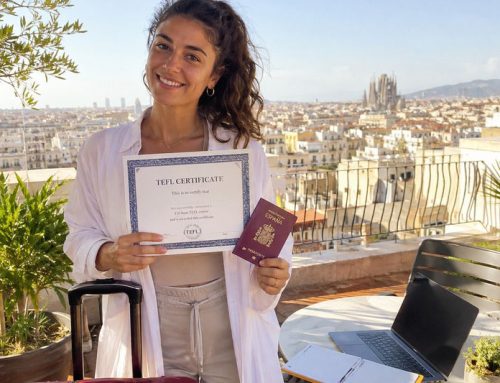
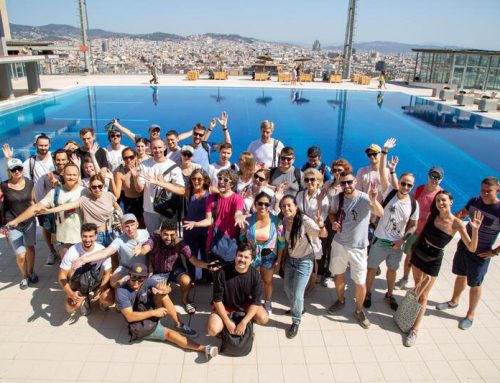
You’d think that after a decade of formal education, I’d have nothing left to learn about how to learn a language. I was wrong. During my gap year, I had the privilege of attending a private language school for Spanish lessons in Barcelona, and it catapulted my language learning further, and faster, than anything that came before it.

In comparison to the slow progress of years of school in the UK, and the even slower progress I’d watched friends make on language apps, my time at the language school was the fastest, most immersive, and most educational experience of my language learning life. It took me from solid-but-shaky to genuinely fluent within a single year.
The quality of teaching far outweighed even university-standard lessons back home. Instead of drilling disconnected vocabulary or chasing a gamified streak that resets your motivation but never your ability, the course walked me through the real foundations of the language, in order, until I could actually use them, in real conversations, with real people, under real pressure. Not just tap the right icon on a screen.

So why doesn’t an app get you there?
It’s not that Duolingo is useless. It’s that it was never built to make you fluent, it was built to make you come back tomorrow. Every streak, badge, and cheerful little chime is designed around one metric: daily engagement, not language proficiency. That’s a completely different goal to yours.
Here’s what apps quietly leave out, the parts that actually build fluency:
- Real speaking practice. Tapping a translation on a screen is not the same as thinking on your feet in a live conversation, where no one waits for you to type.
- Correction and feedback. An app can’t hear the mistake you don’t know you’re making. A teacher can, and will, catch it before it becomes a habit.
- A structured path. Bite-sized lessons feel productive, but without a clear grammatical foundation underneath them, you end up with a pile of vocabulary and no framework to hang it on.
- Immersion and context. Language doesn’t live in isolated sentences about owls and apples. It lives in culture, tone, humour, and the thousand small decisions native speakers make without thinking.
That’s the gap between a 500-day streak and an actual conversation, and it’s a gap no app, however clever its algorithm, is designed to close.
What’s the real solution?
Four hours of focused learning and practice a day, paired with the immersion of living within the language, is a formula for absolute fluency and accuracy. That’s not a slogan, it’s what happened to me. It’s the difference between knowing about a language and knowing it.
And no, that doesn’t mean you need to move to Barcelona for years to see results. It means learning the way that actually works, structured, guided, and immersive, instead of the way that’s simply easiest to fit into a five-minute coffee break.
If you’re ready to ditch the Duo and make real progress on your language goals, sign up for our Spanish language courses in Barcelona today. Your streak got you started. Let’s get you fluent.



Leave A Comment