

Or a trip to the main areas of Barcelona, the Catalan capital
Barcelona is a lady of many faces and a changeable mood. In different areas she shows different traits of her character to the tourists and residents of the city. She can be noisy and fussy in Raval, in Poblenou she puts on a business suit and goes to the office, by the sea she throws off all her clothes and happily warms everybody with her sun, and in the upper town she drinks expensive cocktails in famous clubs.
Do you want to get to know her beauty better? Great! Here is a guide to some districts of Barcelona.
L’Eixample
Barcelona puts on a modernist outfit and a flirty hat, and we find ourselves in L’Eixample.
In the 19th century, the city government persuaded the queen to demolish the walls surrounding the city, in which poor Barcelona was literally suffocating. So, there was a need to build a new district.
The urbanization plan of the city, designed by the engineer Ildefons Cerdà, was accepted. Citizens didn’t like either the plan or its creator, Cerdà, because he was chosen by Madrid. But the plan was actually very interesting. In accordance with this plan, the buildings in L’Eixample had to be built with beveled corners to fill the streets of the new neighborhood with a lot of light and air, and reduce the amount of traffic accidents in the area.
This is what we enjoy nowadays in L’ Eixample.
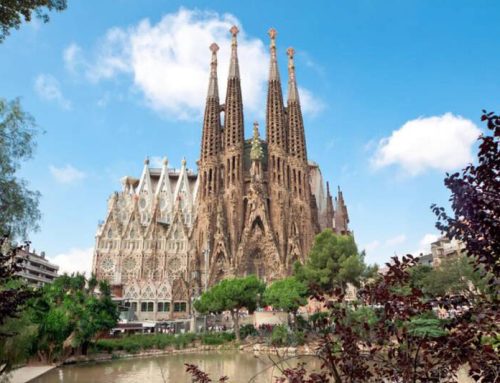
The period of development of the area coincided with the heyday of Art Nouveau, and most of the monuments of that time, including the works of the world-famous Catalan architect Antonio Gaudi, are located here.
L’Eixample is called the cradle of modernism in Barcelona. The district is characterized by the streets having been constructed strictly perpendicular to each other; the length of each block is 133 meters.
On Passeig de Gracia there are shops of elite brands. And it’s also worth going here to enjoy Catalan modernism and its bright natural motifs.
Must see / must visit: Sant Pau Hospital, Casa Amatller and Joan Miró Park. And the famous La Pedrera and Casa Batlló designed by Antonio Gaudi, buildings in the style of Catalan modernism.
Enric Granados is a street full of bars and restaurants. And many more things.

Photo by https://www.instagram.com/digidogs/
Pedralbes
We can afford to move very quickly during our journey through the city districts, so now we are safely transported to the prestigious district of Barcelona located in the western part of the city. Technically, it is part of the larger Les Corts district.
Pedralbes owes its name to the monastery of the same name, which was founded here in 1326. By the way, I recommend you go to the monastery.
- Firstly, you will definitely be impressed by its architecture and tranquility.
- And secondly, there you can visit the Thyssen-Bornemisza Art gallery with a collection of paintings by masters of the Middle Ages and Renaissance.
The Pedralbes area is home to the Royal Tennis Club and the Royal Polo Club. The daughter of the King of Spain has been living here for several years.
Many show-business stars, athletes, politicians and businessmen buy real estate here, not only because of its quality, but also because of the prestige and quiet atmosphere of the area.
Les Corts
One of the areas where Barcelona becomes a business lady and her face becomes very concentrated, but of course, it does not lose its charm. This is the economic and financial center of Barcelona, with many hotels, business centers, shops.
Many tourists come to this area to visit the Camp Nou stadium, and the FC Barcelona Museum, which is in second place on the list of the most famous sights of Barcelona after the Picasso Museum.
Sarria Sant Gervasi
Here Barcelona competes with itself on the prestige of the districts and the price of real estate. Along with the Pedralbes district, this area is considered as one of the most fashionable areas for living in, but it was not always like this.
Previously, the territory of the modern district was occupied by several villages that merged and became part of Barcelona at the beginning of the 20th century.
Therefore, the atmosphere of rural tranquility has been preserved here until now. But nowadays a generous handful of elite restaurants and clubs has been added to Sarria Sant Gervasi
Must see / must visit: Cosmo Caixa, Tibidabo Amusement Park, Barcelona Observatory.
Gràcia
Welcome, or “bienvenido!”as we say in Spanish, to another former village. Until the end of the 19th century, along the road from Gràcia, which is now called Passeig de Gràcia, merchants used to bring food to the city, in the days when it was still surrounded by walls. Nowadays the street, leading from the town centre to Gràcia, is full of shops for every taste and purse.
Once you are in this district, you will immediately feel its special spirit.
Gràcia is known for the summer festival, during which the streets compete with each other in brightness and unusual decorations. This festival is called Festa Major de Gràcia.
Must see / must do.
- Get lost among the streets and admire the architecture.
- Visit Park Güell and the surrounding area.
- Visit someone. Many houses have preserved old interior details, for example, tiles on the floor with a typical pattern, wooden ceiling arches, painted facades.

Photo by https://www.instagram.com/digidogs/
Horta Guinardo
And here again Barcelona puts on a city outfit over its clothes for working in the field. We are in the Horta Guinardo area, which was an agricultural center until the beginning of the 20th century. Several medieval farms and fortresses were located here, as well as aristocratic estates of the 19th century.
Now it is a quiet area, an oasis of tranquility in the city, so it is not so popular among tourists and young people, but it is loved by fans of a pretty slow lifestyle.
Sant Andreu
After we have rested in the Horta Guinardo area, let’s move to the north and get acquainted with another feature of Barcelona — independence and self-sufficiency. We are in the Sant Andreu area. It used to be a separate town, completely independent from Barcelona. It was annexed to Barcelona at the end of the 19th century, but even now it is distinguished by its identity, which you will definitely notice on Rambla de Fabra i Puig street.
The area does not boast of a large number of attractions. The only historical place you can visit is the church of Sant Andreu. But it is quite a green area with two large parks, Parc de la Pegaso and Parc de la Maquinista.
El Raval
A controversial neighborhood with a strong character. Not the safest one, but at the same time colorful with cool historical bars. This area used to be outside the city walls and was considered a suburb of the city, but now it is part of the historical center.
Until the beginning of the 20th century, El Raval was densely populated, its southern part, located near the port, was considered a red light district.
Must see / must visit: MACBA Museum of Contemporary Art, Palau Guell, Hospital Santa Creu, Maritime Museum.
Barrio Gótico
Here the city turns to us with its wrinkled face with its centuries-old history. Many centuries ago there was a Roman village in the area which is now the Barrio Gótico. There are still ruins of a Roman wall, which are preserved here. Most of the buildings were built in the XIV-XV centuries in a strict Gothic style, the streets are narrow, sometimes dark and if you have moved away from the tourist routes you will feel that you are in the Middle Ages.
The treasure of this part of the city is the Cathedral. It is one of the largest Gothic buildings in Spain. Real geese live in one of the chapels of the Cathedral. And in summer you can see a dancing egg there. Are you intrigued?
Must see / must visit: La Catedral, Jewish Quarter, Plaza Real, streets, streets, streets.
Poblenou
A fashionable district for young people and also a business center. In the past, it was an industrial area. What was produced here? Almost everything! It was even called the Catalan Manchester. Now most of the former factories have turned into fashionable lofts, where coworking, music studios, cultural spaces and bars have found their place.
Work on the modernization of the area continues, which does not prevent you from enjoying the area and its old one-floor buildings in the center of Poblenou.
Must see / must visit: Design Museum of Barcelona, Els Encants market, Agbar Tower, coworking and beaches which are away from crowded Barceloneta.

Photo by https://www.instagram.com/digidogs/
Barceloneta
Although I do not advise you to avoid this neighborhood. Historically it was a fishing area, but today it has turned into the modern tourist center of Barcelona, lively by day and night. Although you won’t find the best sand and water there, this part of the beach is the closest to the city center and is full of water activities. However, be especially careful there, as there are a lot of thieves.
Barcelona’s Montjuic district
Sportive Barcelona, looking down on the whole city from a height, is Montjuic. It was the center of the Olympic Games in 1992. But the mountain is famous not only because of that. Its name means “Jewish Mountain”.
The hill got its name because of the ancient Jewish cemetery located here. From the top of the hill there is a breathtaking view of Barcelona. But there is also something to see on the hill itself. Here you can visit the color and music fountain La Fuente Mágica, the Poble Espanyol, Montjuïc Castle, the Museum of Catalan Art, Mies van der Rohe Pavilion and many other things.
Poble Sec
“Dry Village” is the name of the area located at the foot of Montjuic Mountain. “Dry” because there used to be problems with water. Now there is enough water and enough food. The Mecca of all “pintxos” lovers — Carrer Blai Street — is situated in this area.
Of course, colorful Barcelona has much more unforgettable faces. You can explore the city endlessly. And the city will pay for your curiosity with its sunny smiles.
Your guide in Barcelona,
Lilya
@digidogs
Do you want to learn more about to study in Barcelona? Click here


Leave A Comment